
Defending Our Defenders Worldwide



The Office of Special Trial Counsel (OSTC) and Why You Need Experienced Defense Counsel Now More Than Ever
The military justice system changed fundamentally on December 28, 2023. On that date, the Office of Special Trial Counsel became fully operational across every branch of the armed forces, and the most significant restructuring of military criminal prosecution since the creation of the UCMJ took effect.
If you are a service member under investigation or facing charges for a “covered offense” — sexual assault, domestic violence, murder, kidnapping, stalking, child abuse, or any of the other offenses under OSTC jurisdiction — you are no longer dealing with a commander who may exercise discretion in your favor. You are dealing with a professional prosecution office staffed by specially trained military attorneys whose sole mission is to investigate and prosecute you. They report directly to the Service Secretary. They are independent of your chain of command. And they have resources, staffing, and institutional backing that your military defense counsel almost certainly does not.
This is the most adversarial the military justice system has ever been. You need experienced civilian defense counsel who understand how the OSTC operates, what it means for your case, and how to fight back effectively.
Call 800-401-1583 or 202.931.8509 for a confidential consultation.
What Is the Office of Special Trial Counsel?
The OSTC was created by Section 531 of the National Defense Authorization Act for Fiscal Year 2022 (Public Law 117-81), which added Article 24a to the Uniform Code of Military Justice. Each military service — Army, Navy, Marine Corps, Air Force, and Space Force — was required to establish a dedicated, independent prosecutorial office. The Coast Guard followed suit.
Each OSTC is led by a Lead Special Trial Counsel (LSTC) at the rank of at least O-7 (brigadier general or rear admiral) who reports directly to the Service Secretary — not to the Judge Advocate General, not to the Chief of Staff, and not to any commander. This reporting structure was designed to insulate prosecutorial decisions from command influence. In practice, it has created a professional prosecution machine with no countervailing obligation to consider the broader interests of the accused, the unit, or the realities of a particular situation.
The Army OSTC is headquartered at Fort Belvoir, Virginia, and operates 28 field offices across eight circuits covering installations in the United States, Europe, and Korea. The Navy and Marine Corps OSTCs maintain field offices at major installations from Norfolk and San Diego to Yokosuka and Okinawa. The Department of the Air Force OSTC covers both the Air Force and Space Force under a single office.
Every special trial counsel assigned to the OSTC has been individually certified to prosecute covered offense cases. Certification requires demonstrated education, training, experience, and temperament in handling serious criminal cases. These are not junior prosecutors learning on the job. They are experienced litigators whose entire mission is prosecution.
What Are “Covered Offenses”?
The OSTC has exclusive authority over 14 categories of offenses under the UCMJ, plus inchoate offenses (conspiracy, solicitation, and attempts):
- Article 117a — Wrongful broadcast or distribution of intimate visual images
- Article 118 — Murder
- Article 119 — Manslaughter
- Article 119a — Death or injury of an unborn child
- Article 120 — Rape and sexual assault
- Article 120a — Mailing of obscene matter
- Article 120b — Rape and sexual assault of a child
- Article 120c — Other sexual misconduct
- Article 125 — Kidnapping
- Article 128b — Domestic violence
- Article 130 — Stalking
- Article 132 — Retaliation
- Article 134 — Child pornography
- Article 134 — Sexual harassment (effective January 1, 2025, per the FY2023 NDAA)
Critically, the OSTC’s authority does not stop at covered offenses. Once a special trial counsel exercises authority over a covered offense, the OSTC also has discretion over “known offenses” — any other offense allegedly committed by the same accused — and “related offenses” — offenses allegedly committed by a victim or witness to the covered offense. This means a single allegation of domestic violence (even a simple push) or sexual assault can give the OSTC control over your entire case, including charges that have nothing to do with the original covered offense — a drug charge, an Article 92 violation, a fraternization allegation, or anything else in your background.
The FY2024 NDAA further expanded the OSTC’s reach by granting discretionary authority over covered offenses committed before December 28, 2023 — offenses that were already in the system under the old rules. This is known as OSTC “reachback” authority.
What Changed: The Powers the OSTC Now Holds
Before December 28, 2023, the decision to send a case to court-martial rested with the convening authority — a senior commander who, at least in theory, weighed the interests of the accused, the unit, the victim, and good order and discipline. Commanders had discretion. They could resolve a case through nonjudicial punishment (Article 15), administrative action, or even no action at all if the circumstances warranted it.
That discretion is gone for covered offenses.
The special trial counsel now has exclusive authority to:
- Determine whether a reported offense is a “covered offense” — This threshold determination is binding. There is no appeal. If the STC says it is covered, it is covered.
- Refer charges to general or special court-martial — The STC’s referral decision is binding on the convening authority. The commander cannot override, modify, or stop it.
- Enter into plea agreements on behalf of the government — The STC controls the negotiation. Commanders have no role.
- Withdraw or dismiss charges — Only the STC can do this. Commanders cannot dismiss covered offense charges once the OSTC has exercised authority.
- Prefer charges — The STC can both prefer and refer charges in the same case. Under the old system, the accuser (who preferred charges) and the convening authority (who referred them) were separate individuals. Now, the same office controls both functions.
Commanders may provide “input” to the STC regarding case disposition, but that input is explicitly non-binding. The STC can — and does — override commander recommendations. Cases that a commander would have resolved at the lowest level are now fast-tracked to general court-martial.
In its first full year of operations (ending December 28, 2024), the Army OSTC alone reviewed more than 9,500 criminal investigations and exercised authority over 5,600 of those cases. Prosecutors initiated courts-martial in 514 cases and prosecuted 138 to completion, including 63 domestic violence cases. The Department of the Air Force OSTC preferred its first charges on June 15, 2024, referred its first case to court-martial on July 1, 2024, and had 64 OSTC-referred courts-martial docketed and pending trial as of February 2025. These numbers are growing across every branch.
Why the OSTC Makes Experienced Defense Counsel Essential
The creation of the OSTC did not just change who makes the prosecution decision. It fundamentally altered the balance of power in the military justice system — and not in favor of the accused.
The Resource Imbalance Is Staggering
The Defense Advisory Committee on Investigation, Prosecution, and Defense of Sexual Assault in the Armed Forces (DAC-IPAD) conducted site visits across all branches in 2024 and documented a stark reality: OSTC teams can include up to six personnel per case — multiple attorneys, paralegals, investigators, and victim-witness liaisons — while defense teams are frequently limited to one or two attorneys with minimal support.
Defense offices across branches report significant limitations in staffing, technological equipment, and administrative support. Some defense offices are left for weeks or months with only a brand-new defense counsel or a paralegal to handle the entire office — or forced to close entirely. Defense counsel repeatedly described being outmatched by the larger, better-equipped OSTC teams. Even trial counsel on the government side acknowledged the imbalance. The DAC-IPAD report noted that trial counsel themselves “advocate for parity in support and resources to help level the playing field.”
The establishment of the OSTC has drawn experienced legal personnel away from other areas of the JAG enterprise. Command legal offices report that junior legal advisors now occupy roles previously held by more senior officers. The best and most experienced military litigators have been pulled into the OSTC. What is left for defense is less experienced, less resourced, and stretched thinner than ever.
You Are Facing Professional Prosecutors
Under the old system, the trial counsel prosecuting your case was often a relatively junior JAG officer assigned to the installation’s Office of the Staff Judge Advocate. That prosecutor handled everything from legal assistance to administrative law to occasional courts-martial. They were generalists.
The OSTC changed this entirely. Every STC has been individually certified based on education, training, experience, and temperament. According to the Department of the Army, each STC must have “prior training in the handling of covered offense cases, along with significant criminal litigation experience.” The Department of the Navy requires its STCs to be members of the Military Justice Litigation Career Track, with quantitative and qualitative experience, on-the-job training, and personal selection by a board of senior military justice experts.
These are career prosecutors. And in cases they refer to court-martial, a certified STC must serve as government counsel. They are not handing your case off to a junior officer. They are trying it themselves.
If your defense counsel is a first-term JAG with limited litigation experience — which the DAC-IPAD found is common — you are at a severe disadvantage before the trial even begins.
Commander Discretion Is Gone
Before the OSTC, experienced defense counsel could work with the command to resolve cases short of court-martial. A commander who understood the realities of a situation — the weakness of the evidence, the context of the relationship, the circumstances that led to the allegation — could exercise judgment. That commander might refer the matter to an Article 15, administrative action, or take no action at all.
For covered offenses, that option no longer exists once the OSTC exercises authority. If the STC decides to prosecute, the commander cannot stop it. We have seen this dynamic play out in case after case since December 2023 — cases that would never have reached a courtroom under the old system are now going to general court-martial.
An E-6 at Fort Belvoir was charged at a general court-martial — felony-level — for assaulting his teenage son on multiple occasions. Under the pre-OSTC system, a case like this would likely have been handled through nonjudicial punishment or administrative action. But under OSTC authority, it went straight to a general court-martial. After extensive discovery and aggressive motion practice, Mr. Cave and Mr. Freeburg brought the government to a reasonable resolution at the special court-martial level with no confinement. But the service member should never have faced a felony prosecution in the first place.
Simultaneous Reforms Make the System Even Harder to Navigate
The OSTC was not the only change. The same legislation and subsequent NDAAs introduced:
- Judge-alone sentencing: For offenses committed after December 27, 2023, military judges — not panels — now determine the sentence. This eliminates the accused’s ability to seek a more sympathetic panel for sentencing. Sentencing parameters and criteria now guide judicial sentencing, creating a more rigid framework.
- Randomized panel selection: Panel members are now selected through a randomized process rather than hand-picked by the convening authority. While intended to reduce command influence, this also removes the defense’s ability to anticipate panel composition.
- Expanded victim rights: Victims now have broader notification rights, access to Special Victims’ Counsel (SVC) or Victims’ Legal Counsel (VLC), and the ability to participate more actively in the process. While victim rights are important, these changes add another layer of advocacy that the defense must contend with.
- Sexual harassment as a covered offense: Effective January 1, 2025, substantiated formal complaints of sexual harassment under Article 134 became covered offenses, further expanding the OSTC’s jurisdiction and caseload.
Each of these reforms increases the complexity of military criminal defense. Together, they create a system where the prosecution has more authority, more resources, and more institutional support than at any point in the history of the UCMJ — while the defense side has not received corresponding increases in resources, staffing, or experience.
How Cave and Freeburg Defend Against the OSTC
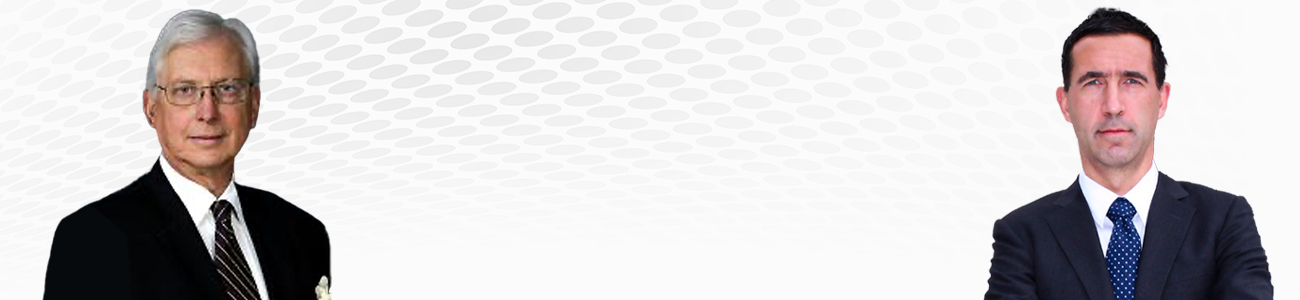
Philip Cave and Nathan Freeburg have been defending service members for a combined 65+ years. They practiced military law long before the OSTC existed, they watched it take shape, and they have been defending against it since day one. They understand how the OSTC operates — its procedures, its pressure points, and its weaknesses.
Early Intervention Before the OSTC Locks In
Once the OSTC exercises authority over your case, the options narrow dramatically. Early retention of experienced civilian counsel — before the OSTC makes its initial determination — can shape the trajectory of the entire case.
A Chief Warrant Officer 4 accused of sexual assault years in the past retained us early. We worked the case during the investigation phase itself and reached a successful conclusion — no trial, no federal conviction — because experienced counsel intervened before the process reached a point of no return.
An E-5 who was told he was being investigated for sexual assault and domestic violence retained us early. We saved his career before the case ever reached a courtroom.
A reserve Navy O-3 with sufficient enlisted time and retirement eligibility was accused of sexual assault. We preserved his retirement — no sex offender registration, no discharge, no federal conviction.
The OSTC is designed to move cases forward toward prosecution. Experienced defense counsel can intervene at the investigation stage to present favorable evidence, challenge the adequacy of the investigation, and give the STC reasons to defer the case back to command — or not to prefer charges at all.
Aggressive Pretrial Litigation
When cases do proceed to court-martial, the motions phase is often decisive. The OSTC’s structure creates new opportunities for defense challenges that did not exist under the old system:
- Defective referral challenges: Under the new system, the STC both prefers and refers charges. This dual role — accuser and referral authority in the same office — presents due-process and structural challenges that experienced counsel must be prepared to litigate.
- Unlawful influence arguments: While the OSTC was designed to be independent of command influence, it is not immune to institutional pressure. Congressional expectations, media scrutiny, and internal performance metrics all create pressure to prosecute. These pressures can form the basis of unlawful influence motions.
- Jurisdictional challenges: The OSTC’s authority over “known” and “related” offenses raises questions about the scope of prosecutorial power. When the OSTC exercises authority over non-covered offenses based solely on their connection to a covered offense, defense counsel must challenge whether that exercise of authority is proper.
In a nationally publicized case at Fort Belvoir, a retired Army Lieutenant Colonel faced court-martial charges. Mr. Freeburg aggressively litigated unlawful command influence and defective referral issues while conducting an extensive case investigation. All charges were dismissed — no federal conviction, no sex offender registration, no dishonorable discharge, and retirement was preserved.
An Army Colonel at Fort Belvoir faced general court-martial charges for death threats, strangulation, and domestic violence against his wife and son. At the Article 32 hearing, Mr. Freeburg argued against probable cause and for dismissal. The charges were dismissed entirely, preserving the officer’s retirement. A Marine Major facing strangulation and domestic violence charges at Quantico received the same result after Mr. Freeburg challenged the evidence at the preliminary hearing.
Trial-Level Defense Against Professional Prosecutors
When a case goes to trial, the OSTC assigns experienced prosecutors backed by a full support team. An inexperienced defense counsel with limited resources is simply not equipped to go up against this.
We have secured acquittals and favorable outcomes against aggressive government prosecution teams across every branch in both courts-martial and administrative separation proceedings:
At Fort McNair, an Army Lieutenant Colonel was accused of domestic violence by his ex-wife for pushing and grabbing. After thorough preparation for cross-examination and a full contested trial, he was acquitted on all charges — no federal conviction, no dismissal, retirement preserved.
At Camp Lejeune a Marine Major was sent to a Board of Inquiry in a prosecution led by the OSTC on charges of purchasing, viewing and possessing child pornography (CSAM). Despite the lower threshold of proof for guilt at a separation proceeding (preponderance of the evidence), the alleged misconduct was not sustained and he was retained in service.
At Fort Drum, Fort Knox, Fort Bragg, Camp Lejeune, and Dyess Air Force Base, we have secured full acquittals on all sexual assault charges — including cases involving multiple alleged victims, child abuse allegations, and charges carrying potential life sentences. At Camp Lejeune, we defended three separate young Marines charged with male-on-male sexual assault and rape in unrelated cases — each was found not guilty of all sexual assault charges.
These results do not happen because the system works. They happen because experienced, aggressive defense counsel forced the system to work.
Appellate Defense After OSTC-Era Convictions
The new sentencing reforms, the OSTC’s expanded authority, and the procedural complexity of the post-2023 system create new appellate issues that did not exist before:
- Whether the OSTC properly exercised jurisdiction over known and related offenses
- Whether the STC’s dual role as accuser and referral authority created structural conflicts
- Whether the new sentencing parameters were properly applied
- Whether the resource disparity between prosecution and defense constituted a due-process violation
- Whether any institutional pressure on the OSTC amounted to unlawful influence
We have extensive appellate experience before all military Courts of Criminal Appeals and the Court of Appeals for the Armed Forces (CAAF). If your trial was tainted by OSTC overreach, procedural error, or an unfair process, we can challenge the conviction on appeal.
The Bottom Line
The creation of the OSTC was the most significant structural change to military justice in decades. It was designed to increase prosecutions and convictions. It was not designed to protect the accused.
You are now facing a professional prosecution office with specialized training, dedicated resources, institutional backing, and no obligation to consider anything other than whether to charge and convict you. Your military defense counsel — no matter how well-intentioned — is likely outmatched in experience, resources, and support.
This is why experienced civilian defense counsel is not a luxury in the OSTC era. It is a necessity. Philip Cave and Nathan Freeburg have the experience, the knowledge, and the track record to defend you against the full weight of the OSTC.
Call 800-401-1583 or 202.931.8509 for a confidential consultation.
The Office of Special Trial Counsel — Frequently Asked Questions
What is the Office of Special Trial Counsel (OSTC)?
The OSTC is an independent military prosecution office created by Congress in the FY2022 National Defense Authorization Act (Section 531, adding Article 24a to the UCMJ). Each military service — Army, Navy, Marine Corps, Air Force, Space Force, and Coast Guard — has its own OSTC. The OSTC has exclusive authority over the investigation and prosecution of 14 categories of serious offenses, called “covered offenses,” including sexual assault, domestic violence, murder, kidnapping, and child pornography. The Lead Special Trial Counsel of each OSTC reports directly to the Service Secretary, not to any commander or the Judge Advocate General.
When did the OSTC become operational?
The OSTC reached full operational capability on December 28, 2023. From that date forward, the OSTC has had exclusive authority over all covered offenses committed on or after that date. The FY2024 NDAA also gave the OSTC discretionary authority over covered offenses committed before December 28, 2023.
What are “covered offenses” under the OSTC?
Covered offenses are 14 categories of serious crimes under the UCMJ: wrongful broadcast of intimate images (Art. 117a), murder (Art. 118), manslaughter (Art. 119), death or injury of an unborn child (Art. 119a), rape and sexual assault (Art. 120), mailing of obscene matter (Art. 120a), rape and sexual assault of a child (Art. 120b), other sexual misconduct (Art. 120c), kidnapping (Art. 125), domestic violence (Art. 128b), stalking (Art. 130), retaliation (Art. 132), child pornography (Art. 134), and sexual harassment (Art. 134, effective January 1, 2025). Conspiracy, solicitation, and attempts to commit these offenses are also covered.
Can the OSTC take over my case even if the original charge is not a covered offense?
Yes. Once the OSTC exercises authority over a covered offense, it also has discretion over “known offenses” (any other offense allegedly committed by the same accused) and “related offenses” (offenses allegedly committed by a victim or witness). This means a single allegation can give the OSTC control over your entire case, including charges unrelated to the original covered offense.
Can my commander stop the OSTC from prosecuting my case?
No. The STC’s decision to refer charges to court-martial is binding on the convening authority. Commanders may provide non-binding input to the STC regarding case disposition, but the STC is not required to follow it. For covered offenses, the commander cannot dismiss, withdraw, or modify charges once the OSTC has exercised authority.
Can the OSTC prosecute offenses that occurred before December 28, 2023?
Yes. The FY2024 NDAA granted the OSTC discretionary authority over covered offenses committed on or before December 27, 2023. The OSTC exercises this authority on a case-by-case basis, particularly in cases that are already well-developed in the system.
Why does the OSTC make civilian defense counsel more important?
The OSTC has fundamentally changed the balance of power. You are now facing professional prosecutors who are individually certified, specially trained, and backed by dedicated resources — including investigators, paralegals, victim-witness liaisons, and forensic support. A 2024 review by the Defense Advisory Committee on Investigation, Prosecution, and Defense of Sexual Assault (DAC-IPAD) found that OSTC teams can include up to six personnel per case, while defense teams are frequently limited to one or two attorneys with minimal support. Military defense counsel are often less experienced than STCs and lack comparable resources. Civilian defense counsel provide the experience, independence, and dedicated focus needed to counter the OSTC’s institutional advantages.
Is the OSTC truly independent, or is it subject to pressure?
The OSTC was designed to be independent of military command chains. However, the OSTC exists because Congress responded to political and media pressure to increase prosecution rates for sexual assault and domestic violence. Internal performance metrics, congressional oversight, and institutional expectations all create pressure to prosecute. This is not the kind of independence that benefits the accused. It is a prosecution office under pressure to bring cases — not to exercise restraint.
What other military justice reforms took effect alongside the OSTC?
Several significant reforms took effect alongside or shortly after the OSTC: judge-alone sentencing with parameters and criteria for offenses committed after December 27, 2023; randomized panel selection; expanded victim notification rights; increased resources for Special Victims’ Counsel; and the addition of sexual harassment as a covered offense effective January 1, 2025. Together, these changes make military criminal defense more complex and more challenging than at any point in the history of the UCMJ.
What should I do if the OSTC is involved in my case?
Retain experienced civilian defense counsel immediately. The earlier you act, the more options you have. Before the OSTC makes its initial determination on your case, experienced counsel can present favorable evidence, challenge the investigation, and influence whether the case moves forward. Once the OSTC exercises authority and refers charges, your options narrow significantly. Do not speak to investigators. Do not consent to searches. Contact Cave and Freeburg for a confidential consultation at 800-401-1583 or 202.931.8509.
By Philip Cave and Nathan Freeburg at www.court-martial.com. (Last reviewed, March 21, 2026.)
Related Pages:
- Sexual Assault Court-Martial Defense (UCMJ Article 120)
- Assault Court-Martial Defense (UCMJ Article 128)
- Domestic Violence Court-Martial Defense (UCMJ Article 128b)
- Under Investigation
- UCMJ Appeals: Protect Your Rights with Proven Military Appellate Defense
- Administrative Discharge Defense
- High Profile and Multi-Victim Courts-Martial
- CSAM Allegations at Court-Martial