
Defending Our Defenders Worldwide

Sexual Assault Court-Martial Defense (UCMJ Article 120)
Being accused of sexual assault under Article 120 of the Uniform Code of Military Justice (UCMJ) is life-changing. Your career, reputation, freedom, and retirement benefits are all on the line. A conviction can mean decades in prison, a dishonorable discharge, and mandatory sex-offender registration.
But the greatest danger is not just the statute—it is the modern military justice system, reshaped by Congress, political pressure, and media narratives that often presume guilt before trial.
If you are under investigation or facing charges, you need an experienced, relentless military sexual assault defense lawyer who understands both the law and how these cases are actually prosecuted.
Call or message us and we can set up a consultation immediately.
What Is Article 120 of the UCMJ?
Article 120 (10 U.S.C. § 920) governs sexual assault offenses in the U.S. military, including:
- Rape
- Sexual assault
- Aggravated sexual contact
- Abusive sexual contact
- Attempts to commit these offenses
Related statutes include:
- Article 120b (sexual offenses involving children)
- Article 120c (indecent viewing, recording, or broadcasting)
Military definitions of consent, sexual acts, and sexual contact differ sharply from civilian law. Small details—alcohol use, text messages, prior interactions—often decide whether a case becomes a General Court-Martial.
What Happens in a Court-Martial?
What You Need to Know Immediately
Article 120 cases are among the most aggressively prosecuted offenses in the military. Many involve:
- Conflicting statements
- Alcohol or intoxication allegations
- Delayed reporting
- Little or no physical evidence
In many cases, testimony alone is enough to convict. Credibility is often the entire case.
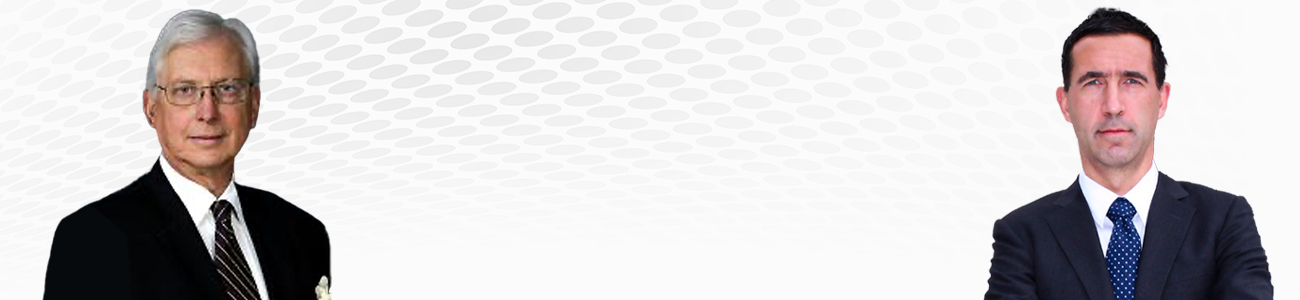
Nathan Freeburg and Philip Cave have successfully defended hundreds of Article 120 cases across every branch, nationwide and overseas. Our results include full acquittals on all sexual assault charges at Fort Drum, Fort Knox, Fort Bragg, Camp Lejeune, Eileson Air Force Base, Dyess Air Force Base and many many other installations — including cases involving multiple alleged victims, child abuse allegations, and charges carrying potential life sentences. We have secured not-guilty verdicts in cases tried before military judges and panels alike. We know how the Office of Special Trial Counsel (OSTC) builds these cases — and how to expose their weaknesses.
A System Stacked Against the Accused
Sexual assault prosecutions in the military no longer operate like traditional criminal cases.
- OSTC prosecutors face pressure to prefer charges based on allegations alone
- Investigators may rely on biased or unreliable “corroboration”
- Panel members know their careers may suffer if they appear “soft”
- Acquittals attract institutional and media scrutiny
The result is a system where service members are often treated as guilty before trial. We have seen an O-8 investigated for serious sexual assault offenses and a Colonel accused of rape and war crimes while deployed — cases at the highest levels of the military where institutional pressure to convict is enormous. You cannot afford a passive defense.
How an Article 120 Court-Martial Proceeds
Preferral of Charges
Charges are formally read and acknowledged. You are assigned a military defense counsel. This is often the most critical moment to hire experienced civilian counsel. In one of our cases, a Chief Warrant Officer 4 accused of sexual assault years in the past was able to reach a successful conclusion during the investigation phase itself — no trial, no federal conviction — because experienced counsel intervened early and shaped the outcome before charges were ever preferred.
Article 32 Hearing
Now largely a probable-cause proceeding. A skilled defense lawyer uses it to lock in testimony and shape future motions. In one case, we represented two senior enlisted members — an E-8 and an E-9 — jointly accused of sexually assaulting another E-8. Our pre-hearing investigation exposed the inadequacy of the OSI/NCIS/CID investigation, and we used a pretext phone call to strengthen our client’s position. Prosecutors themselves recommended dismissal of the charges after the Article 32. The military judge later granted our joint motion to reopen the hearing — an extraordinary result that ended the case.
Referral and Arraignment
The OSTC refers charges to trial. You appear before a military judge and usually reserve pleas.
Pre-Trial Motions
These hearings decide what evidence the jury ever sees—and sometimes whether the case survives at all. In a nationally publicized case at Fort Belvoir, a retired Army Lieutenant Colonel faced court-martial charges for sexual assault. Mr. Freeburg aggressively litigated unlawful command influence and defective referral issues while conducting an extensive case investigation demonstrating the weakness of the allegations. All charges were dismissed — no federal conviction, no sex offender registration, no dishonorable discharge, and retirement was preserved.
What are Motions in a Court-Martial?
Judge or Panel Selection
Panels are hand-selected by senior commanders. In some cases, a judge-alone trial is strategically superior. We have secured acquittals before both panels and military judges. In one case, our client — an officer accused of sexually assaulting another officer — was acquitted of all sexual assault charges by a military judge after we demonstrated the weakness of the government’s case. In another, an Air Force Senior Master Sergeant accused of indecent exposure received a very quick not-guilty finding from the panel — no federal conviction, retirement preserved.
Trial
Trials can last weeks. Preparation, cross-examination, and evidentiary control matter. At Camp Lejeune, we defended three separate young Marines charged with male-on-male sexual assault and rape in unrelated cases — each was found not guilty of all sexual assault charges, with no sex offender registration. At Fort Bragg, an Army Sergeant investigated by two states for child rape, rape, and sexual assault was found not guilty of all sexual assault charges after a contested trial. These results do not happen by accident. They happen because of relentless preparation and aggressive cross-examination.
Critical Evidence Battles in Article 120 Cases
MRE 412 — The Military Rape Shield Rule
Military Rule of Evidence 412 strictly limits evidence about the accuser’s sexual behavior—even when it bears directly on consent or motive. Courts interpret its exceptions narrowly.
Without experienced counsel, critical evidence may never reach the panel.
MRE 404(b) and 403 — Prior Bad Acts
Prosecutors often attempt to introduce unrelated allegations to inflame the jury. These efforts must be challenged aggressively under Reynolds, MRE 403, and due-process principles.
Credibility Is the Case
In most military sexual assault prosecutions, credibility decides the verdict.
Defense strategies often focus on:
- Prior inconsistent statements
- Contradictions with texts, social media, or witnesses
- Delayed or evolving narratives
- Motive to fabricate (relationships, alcohol violations, collateral misconduct)
Creating reasonable doubt here can end the case. We have seen this dynamic play out repeatedly in spousal and domestic cases — an Army Chief Warrant Officer accused of sexually molesting his sons during a custody battle was completely exonerated with no federal conviction, no titling, no sex offender registration, and his career was saved. An Air Force Staff Sergeant accused by his estranged wife during a custody dispute at Dyess Air Force Base saw all charges dismissed. An officer accused by his spouse of sexual assault, drug use, and other misconduct during a divorce proceeding saw his commander terminate the administrative separation without further action. When the motive to fabricate is exposed, the case collapses.
Common Defenses to Article 120 Charges
Every case is fact-specific, but common defenses include:
- Consent or mistake of fact as to consent
- False or exaggerated allegations
- Motive to fabricate
- Lack of physical or forensic evidence
- Mistaken identity or alibi
- Due-process violations and unlawful command influence
- Alcohol-related incapacity issues (challenging the government’s theory of the accuser’s level of intoxication)
Early, aggressive defense work matters. An E-5 who was told he was being investigated for sexual assault and domestic violence retained us early — and we saved his career before the case ever reached a courtroom. There are many similar cases.
Article 120 UCMJ Punishment
Potential penalties include:
- Rape: Life imprisonment, dishonorable discharge
- Sexual Assault: Up to 30 years confinement and mandatory dishonorable discharge
- Aggravated Sexual Contact: Up to 20 years confinement
- Abusive Sexual Contact: Up to 7 years confinement
Convictions at a court-martial almost always involve sex-offender registration and permanent career damage. Even at lesser forums the consequences can be severe. An O-5 facing a board of inquiry for alleged abusive sexual contact saw the board find no abusive sexual contact occurred — preserving his career and reputation. Results like these underscore why experienced counsel matters at every stage, not just at trial.
Why Choose Cave & Freeburg
- Philip Cave and Nathan Freeburg have a combined 60+ years of experience in military criminal defense, including hundreds of Article 120 and complex court-martial cases defended
- We have handled Article 120 cases across every branch — Army, Navy, Air Force, Marines, Coast Guard, and Space Force
- Worldwide representation at every base, post, and installation — from Fort Bragg, Fort Drum, Fort Belvoir, Fort Knox, Camp Lejeune, Norfolk, and Washington Navy Yard to Dyess, Ramstein, Okinawa and installations worldwide
- Deep knowledge of OSTC procedures, MRE 412, and military appellate case law
- Proven results: full acquittals on rape and sexual assault charges; charges dismissed at every stage from investigation through trial; careers and retirements preserved for enlisted members and senior officers alike; multiple multi-victim cases successfully defended
- We retain independent forensic, medical, and digital evidence experts when your case demands it
- No junior associates — your case is handled by senior attorneys only
- We are independent of the chain of command. Our loyalty is to you
What to Do If You Are Under Investigation
- Do not speak to investigators — not NCIS, CID, OSI, or CGIS
- Do not consent to searches
- Do not try to “clear things up”
- Do not contact the accuser or witnesses
- Do not post anything on social media
Every statement can be used against you.
Speak With an Article 120 Defense Lawyer Now
If you are under investigation or charged under Article 120 UCMJ, timing matters. Early intervention can preserve evidence, shape the narrative, and protect your rights.
Contact Cave & Freeburg for a confidential consultation with experienced military sexual assault defense attorneys.
Article 120 UCMJ – Frequently Asked Questions
What is Article 120 of the UCMJ?
Article 120 is the military statute governing rape, sexual assault, aggravated sexual contact, and abusive sexual contact. It applies to all service members subject to the UCMJ and carries some of the most severe penalties in the military justice system.
Can I be convicted without physical evidence?
Yes. Testimony alone can support a conviction in a court-martial. Many Article 120 cases proceed with no DNA, no forensic evidence, and no medical records. The government’s case often rests entirely on the credibility of the accuser.
Is there a statute of limitations for Article 120?
Most rape and sexual assault offenses under the UCMJ have no statute of limitations. We have defended cases where allegations surfaced years after the alleged conduct — including a Chief Warrant Officer accused of sexual assault years in the past, which we resolved successfully during the investigation phase with no trial and no conviction.
What is consent under Article 120?
Consent must be a freely given agreement. Intoxication to the point of incapacitation, unconsciousness, or coercion can negate consent under military law. The military’s definition of consent is narrower than most civilian jurisdictions, and the prosecution frequently argues that alcohol consumption alone rendered the accuser incapable of consenting.
Should I talk to investigators if I’m innocent?
No. Even innocent statements can be misinterpreted, taken out of context, or used to build a case against you. Invoke your right to counsel immediately and contact an experienced defense attorney before speaking with anyone.
What if the accuser recants or does not want to press charges?
The OSTC can — and often does — proceed with prosecution even when the accuser recants or does not want to go forward. Military prosecutors are under institutional pressure to take cases to trial regardless of the complainant’s wishes.
Can false allegations of sexual assault really happen in the military?
Yes. False and exaggerated allegations arise in a variety of contexts, including custody disputes, relationship breakdowns, career retaliation, and attempts to avoid accountability for one’s own misconduct (such as alcohol violations or fraternization). We have defended numerous cases where the motive to fabricate was the central issue — and where exposing that motive resulted in acquittal or dismissal of charges.
What happens to my military career if I am convicted under Article 120?
A conviction under Article 120 almost always results in a punitive discharge (dishonorable or bad conduct), confinement, reduction in rank, forfeiture of pay, mandatory sex offender registration, and a permanent federal criminal record. Even acquittals can leave a mark — which is why we fight aggressively to protect your record at every stage.
Can I be investigated or charged for allegations that occurred years ago?
Yes. There is no statute of limitations for most Article 120 offenses. We have successfully defended cases where allegations surfaced years after the alleged conduct occurred.
What is the difference between Article 120 and Article 120b?
Article 120 covers sexual assault offenses involving adults. Article 120b covers sexual offenses involving children, including sexual abuse and sexual assault of a minor. Article 120b offenses carry severe penalties, including mandatory sex offender registration and lengthy confinement. We have successfully defended child sexual abuse cases, including a Sergeant Major found not guilty of all charges and a Soldier accused of sexual abuse of a child who received no federal conviction, no sex offender registration, and no dishonorable discharge.
By Philip Cave and Nathan Freeburg at www.court-martial.com. (Last reviewed March 13, 2026.)